


The Fascinating History Behind Gemstones
The Fascinating History Behind Gemstones
A Gemstone may begin its life deep inside the Earth and Ocean as a mineral, crystal, or just a piece of rock. But as humans evolved, they also began to evolve. At some point in human history, stones became something more than a geological material. They became treasures.
People started wearing them around the neck and on the ankles, placing them in royal crowns, burying them with the dead, trading them across continents, incorporating them into religious objects, and believing they offered protection, luck, strength, and spiritual power.

But you always wonder where the word “gemstone” comes from?
And perhaps more interestingly, when did humans first begin looking at a beautiful stone and think, “This is something special”?
The answer takes us on a journey through religion, royalty, language, archaeology, ancient trade, and our enduring fascination with the natural world.
Where Did the Word “Gem” Come From?
The history of the word Gem is amazingly beautiful.
The word gem comes from the Latin word Gemma.
In Latin, gemma had two closely connected meanings: a bud or young growth on a plant, and a precious stone or jewel. Ancient Latin dictionaries record both meanings.
Now you may be thinking, what does a flower bud have to do with sapphire, ruby, emerald, or any other gemstone? Is it really connected with gemstones?
The connection may have been visual.
Can you imagine a little flower bud? A bud is a small, compact object that appears on a branch, often with a distinctive shape and beautiful colors. Ancient Latin usage extended the word gems from a plant bud to something resembling it in appearance and eventually to a precious stone or jewel.
So, in a sense, the ancient word carried an idea of something small, beautiful, remarkable, and precious.

Over time, gemma became associated primarily with precious stones and jewels. The English word gem appeared in the Middle English period, with dictionaries placing its first English uses around the late 13th or early 14th century. Oxford traces modern gem through Old English gim to Latin gemma, with influence from Middle English and Old French gemme.
Interestingly, gem eventually evolved into another figurative meaning that we use today.
We call an exceptional person, place, or work of art “A Gem.” It is a metaphor for something rare, beautiful, valuable, or exceptional.
So Where Did “Gemstone” Come From?
The word gemstone is basically a combination of two words: Gem + Stone.
The compound is much older than modern jewelry and gemstone marketing. The Old English Gimstan combined the idea of a gem with a stone.
There is an interesting story behind these two words.
Stone denotes a physical material.
Gem denotes something precious, valuable, beautiful, desirable, or worthy.
So now you understand that a gemstone is not just a simple stone but a stone, mineral, material, or a natural substance that is beautiful, desirable, valuable, and precious.

And all of this brings us to the very interesting question!
When Did Humans Primarily Find a Stone as Something More Than a Normal Rock?
It was not a single moment when they thought these rocks were valuable; instead, the idea developed gradually over time.
The archaeological record gives us an extraordinary glimpse into this ancient behaviour.
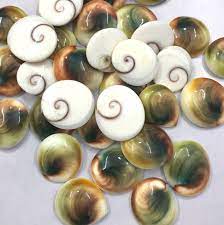
Some of the earliest known beads were made from marine shells. They made a hole and used them as beads. Shell beads connected with modern humans have been uncovered at sites like Skhul and Qafzeh Cave in Israel, Grotte der Pigeons in Morocco, and Blombos Cave in South Africa, with some examples dating back approximately 77000-110000 years.

These were not “gemstones” in the modern sense, but they help us to understand gemstones.
Humans have been wearing, selecting, and assigning meaning to beautiful natural materials for an extraordinarily long time.
Eventually, certain stones became desirable. Do you ever wonder why? So let me take you there.
So the first is:
Color:
Color was one of the most obvious reasons. Colors always attract living beings.
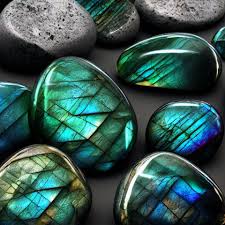
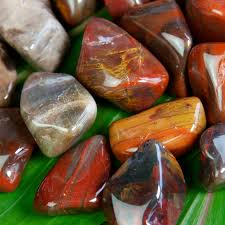
A bright blue stone, deep red crystal, vivid green mineral, sun-kissed bright yellow crystal, or translucent piece of material would have stood out, making it an extraordinary rock.
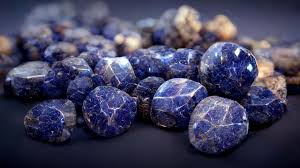
Let’s imagine Lapis Lazuli.
Its intense blue color made it highly desirable in the ancient world. In Ancient Mesopotamia, lapis lazuli was used heavily in jewelry. The material came from far away- particularly the region of Badakhshan in present-day Afghanistan. Making it valuable not only because of its color but also because of the enormous distance it had travelled.

Color could transform a piece of mineral into something extraordinary.
Second,
Shine and Light:
Some stones capture light, and others reflect it.
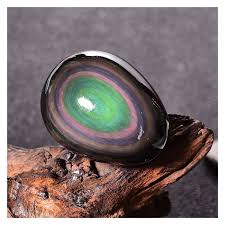
Some are transparent enough to reveal what is inside them, while some others have a flash, a mysterious glow, and some play with colors.
This mesmerizing shine and light have fascinated people for thousands of years.
Even without understanding crystallography or optical physics, ancient observers could recognize that certain materials behaved differently from ordinary stones.
A polished surface could make that difference even more dramatic.

The Third,
Rarity:
A stone found everywhere is unlikely to have the same social value as one that can only be obtained from a difficult-to-reach location.
This is where gemstones became connected with trade.
Lapis lazuli at Ur is a perfect example. Its presence in Mesopotamian jewelry demonstrates long-distance connections between societies because the stone was not locally available.
A gemstone could represent not only beauty, but also exploration, distance, wealth, and access to distant worlds.

Fourth is,
Durability:
As we all know, beauty alone is not enough.
Many materials are colourful, beautiful, or attractive, but stones that could survive years of handling, carving, and polishing offered something more.
Durability made certain minerals particularly suitable for jewelry, ornaments, objects, tools, and seals.
Hardness and resistance helped gemstones to survive and helped to pass from one generation to another.

Fifth is,
Beauty:
As we all know, beauty is one of the first things we notice. Living beings have always been attracted to things that stand apart. Beauty may be the simplest explanation- and may be the most difficult to define.
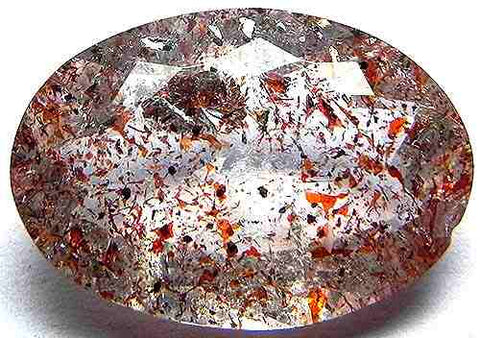
A mesmerizing colored crystal.
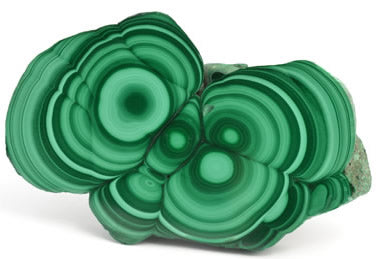
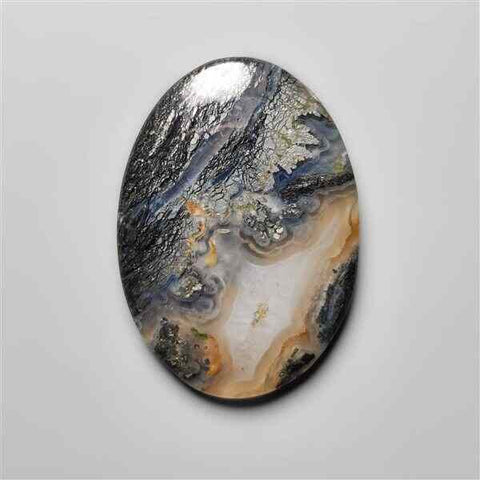
A stone with a unique pattern.
A mineral glowing in sunlight.
A piece with an extraordinary texture and appearance.
And sometimes a different stone.

This “different” stands out as “Precious.”
From Beautiful Stones to Jewelry
Once humans began collecting beautiful natural minerals, they started turning them into beads, rings, pendants, and other forms of jewelry.
Jewelry soon became more than a decorative piece. It could represent beauty, wealth, identity, status, and cultural traditions.
The Royal Cemetery at Ur, the third millennium BCE, provides a remarkable example. Ancient jewelry made with gold, lapis lazuli, carnelian, and other materials shows how gemstones were already connected to craftsmanship, wealth, culture, and long-distance trade thousands of years ago.

Gemstones as Objects of Trade
Gemstones helped so much to connect civilizations.
Materials such as lapis lazuli and carnelian travelled huge distances through early trade networks. Lapis Lazuli moved from Central Asia into the ancient Near East, and Carnelian reached Mesopotamia from regions including the subcontinent.
Gemstones were therefore not simply beautiful objects- they were part of a much more interesting and larger story of people, trade, travel, and a big cultural exchange.

Gemstones and Spiritual Beliefs
Across different cultures, gemstones were given meanings beyond their physical beauty.
Over time, they became connected with protection, luck, and royalty. Lapis lazuli, amethyst, and sapphire developed in rich traditions.
These were just cultural beliefs rather than scientific proof.

Gemstones as Symbols of Power
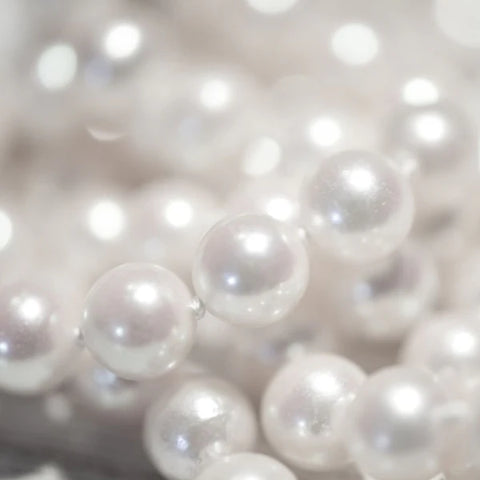
Royalty often used gemstones to display wealth and authority. They used diamonds, rubies, emeralds, sapphires, pearls, and other precious minerals in crowns, rings, royal jewelry, and ceremonial objects.
In India, gemstones became especially important during the Mughal period. The Navaratna, meaning “nine gemstones,” is one famous tradition in which nine gems were connected with celestial bodies and were believed to offer protection and beneficial influence.

Gemstones had become far more than decoration or jewelry; they had become the symbols of power, belief, and identity.
From Ancient Treasures to Modern Gemstones
Today, science allows us to study gemstones in remarkable detail. We can study their chemical composition, crystal structure, hardness, and properties.
A sapphire is more than a blue crystal. Lapis Lazuli is more than an amazing blue mineral. A diamond is more than a brilliant and one of the hardest stones.

Each stone shows geology, trade, culture, and thousands of years of human history.
The Ancient Fascination With Gems
Humans began appreciating beautiful natural materials long before the word gemstone existed.
They noticed unusual colors, patterns, shine, durability, and rarity and gave these crystals meaning and importance.
Over thousands of years, these became trade, royal treasure, jewelry, religious and spiritual objects, cultural symbols, and works of art.
That is what makes gemstones so unique and fascinating.

Each gemstone has two stories: One is written by the earth or nature, and another is written by the people who discovered, shaped, traded, and passed it on from one generation to another.
FAQ:
-
Where did the word “Gemstone” come from?
The word gemstone is a combination of the two words “gem” and “stone”. The word "gems" comes from the Latin word “gemma”, which meant a flower bud or something precious.
-
When did humans first start using gemstones?
Humans have been collecting and using beautiful natural materials for thousands of years. People used marine shells as beads.
-
Why were gemstones important to royalty?
Gemstones were a symbol of power, wealth, and royalty. Precious stones were often used in crowns, weapons, rings, and royal objects.
-
What makes a stone a “gemstone”?
Their beauty, rarity, durability, appearance, and inclusions make them stand out and make them unique and valuable.


Post Comment