


The Hidden History Of Labradorite: The Stone That Looks Like The Northern Lights

What if the mesmerizing Northern Lights are trapped inside a rock?
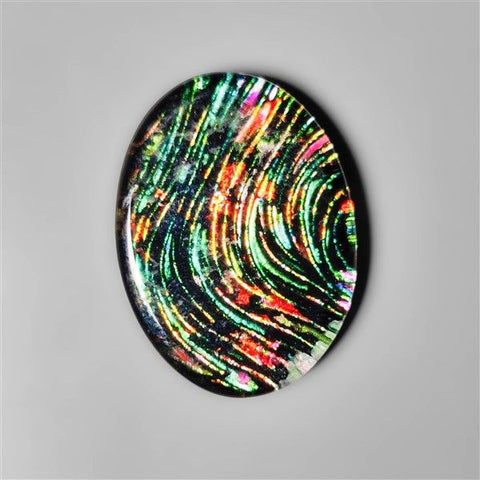
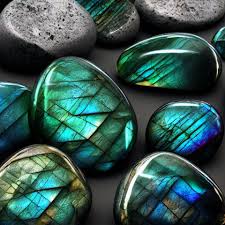
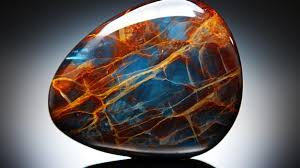
Turn a piece of Labradorite in your hand and, for a moment, you can feel as though you are holding a piece of the night sky. How do you feel? Isn’t it amazing? A dark grey-black surface suddenly flares up with electric blue, flashes of green, violet, orange, and golden. Move the stone slightly, and the colors disappear. Now turn it again; magic happens, the colors return, it is magical, isn’t it?
This extraordinary phenomenon is called Labradorescence.

But the story of Labradorite is much older and more fascinating than its modern image as a mesmerizing gemstone. Its history begins on the shore of Labrador, Canada, where the mineral became known to European mineral collectors in the eighteenth century. It is also connected to Indigenous history, folklore, the Northern Lights, and eventually to the scientific discovery of why the stone seems to carry light inside it.
Today, Labradorite is sourced from different parts of the world, but its name and history remain tied to Labrador, Canada.
Where Does Labradorite Come From?
Labradorite is a member of the feldspar family, a major family of minerals found in the Earth’s crust.
Now Labradorite is found in several locations around the world, including Finland, Madagascar, Russia, Canada, and the United States, from which its name came from- the Labradorite region of Canada.
Labradorite was first discovered in 1770 on the Isle of Paul, near the town of Nain in Labrador, Canada. The local people were already familiar with this mineral and used it in ornaments and tools.

The geology of this place helps explain why Labradorite occurs there. These rocks formed deep inside the Earth and cooled down very slowly, giving their minerals time to create complex internal structure. This slow geological process would eventually become responsible for Labradorite’s most famous feature: its magical, mesmerizing flash of colors.
But before scientists understood any of that, people simply saw something magical in the stone.
Labradorite Enters European History
According to the European story, Labradorite begins around 1770.
Moravian missionaries were exploring the Labrador coast when European knowledge of northern Labrador was expanding rapidly.
Historical sources show Labradorite specimens found around this time and sent back to Europe. An early 20th-century account in Encyclopaedia Britannica states that the mineral was discovered as boulders by the Moravian Mission around 1770 and that specimens were subsequently sent to London.
A particularly important early specimen entered the collection of the British Museum in the eighteenth century. The museum documents a large polished Labradorite slab in 1777 by Reverend Benjamin Latrobe. He was connected with the Moravian mission in Labrador. This is very remarkable for the collectors and scientists.

The name is ultimately connected with the place where it was found: Labrador.
Before European Mineralogy: Indigenous Knowledge
There is a major distinction to make when we are discussing the History of Labradorite.
European scientists may have introduced the mineral to the formal scientific world in the 18th century, but that does not mean Indigenous people were experiencing the stone for the first time.
Historical sources record Labradorite being known among Inuit communities in Labrador. A Smithsonian Bureau of American Ethnology publication from 1941 states that Labradorite was known as “fire-rock”.
Historical accounts also describe Labradorite as a material encountered and collected in Labrador before and around the period of European mineralogical interest. The Newfoundland and Labrador Heritage website records the historical expression “Fire-rock” in connection with Labradorite.

It’s an important part of the story because it reminds us that a mineral does not become meaningful simply because European science gives it a name.
The people who live there are already aware of this mineral.
Labradorite and the Northern Lights
We can clearly connect Labradorite with the Northern Lights, or Aurora Borealis.
The Northern Lights are one of the most spectacular and mesmerizing natural phenomena visible in the northern regions. The bands of green, blue, violet, orange, yellow, and other colors can be seen moving across the night sky. Labradorite also shows mesmerizing vibrant colors with visuals remarkably similar to the Northern Lights.
As we move the stone slightly, it reflects the light.
Blue appears.
Then green,
The violet, and so many.
Move the stone again, and the colors vanish.
Move it back, and the flash returns.
It is very easy to understand why people finding this gorgeous stone would connect it with the mysterious northern light dancing in the sky.
Labradorite tradition tells of light being captivated within the rocks and later released towards the sky. A version preserved by the Winnipeg Art Gallery describes an Inuit origin story from Nunatsiavut in which an elder strikes Labradorite with a spear, releasing the aksaniq into the sky, where it becomes the Northern Lights.

Another modern presentation of the tradition tells of an elder striking the earth, releasing light from Labradorite and sending it upward into the night sky.
Legend, History, and What We Can Actually Document
The story of the Northern Lights being trapped inside the rock is repeated widely today as an “Inuit legend.”
Indigenous cultures are not one single culture with one single mythology.
Inuit communities across the Arctic have diverse traditions and stories concerning the Northern Lights.
What we can document more securely is the historical association of Labradorite with Inuit communities, its description as “Fire-rock,” its ornamental use, and the continuing presence of the Labradorite and Aurora story is culture interpretation today.

This story makes it more fascinating.
Why Does Labradorite Look Like It Contains Light?
This is very interesting; the story meets science.
The light is not actually trapped inside the rock. Its mesmerizing flash or colors are the result of a spectacular phenomenon called Labradorescence.
At the time of its geological formation, extremely thin layers are deposited inside the crystal. These layers are called exsolution lamellae.
When light enters the stone, it interacts with these thin layers. The light reflects from one layer to another. Depending on the thickness and arrangement of the layers, particular wavelengths of light are strengthened, and others weakened; then this spectacular phenomenon happens.

The colors are visible because the stone’s internal structure interacts with the light at different angles. Also, this is why colors change when we move the stone or change its angle.
Why Does the Color Move?
Now you all must be thinking why the colors dance when we move the stone.
One of the most unique things about Labradorite is that its color usually is not equally visible from every angle.
Sometimes Labradorite can look black or grey, and you see no colors.
But as you move the stone, slightly different colors like blue, purple, golden, and others start dancing.
And when you move the stone again, the colors are gone.

The microscopic lamellar structures inside the stone interact with light according to their arrangement. Create different reflected wavelengths depending on the viewing and lighting angles.
A skilled lapidary can orient the mineral to reveal the areas by faceting and polishing where the colors are strongest.
From Labradorite to the Rest of the World
As we know, Labradorite’s historical identity belongs to Canada, but it is not limited to there only.
Today we can find Labradorite in several parts of the world.
Madagascar is an important source of gem-quality minerals; its deposits are also found in Finland and Russia. Finland is specifically known for its vibrant and intense colors of Labradorite called Spectrolite. Labradorite is also found in several parts of the United States.
The colors of Labradorite vary from one place to another because of mineral deposition.
No two pieces reveal their color in the same way.

The Hidden History of a Stone That Looks Like the Sky
The History of Labradorite is really a meeting point of geology, human observation, European science, Indigenous storytelling, and modern lapidary art.
Its geological story began deep inside the earth, where different types of minerals cool down over immense periods of time.
It's documented that European history first engaged with this mineral on the coast of Labrador around 1770, and Moravian Missionaries encountered and transported it.
Then European mineral collectors and scientists got to know about this rock and were attracted to this mesmerizing rock.
This stone was already familiar and used in Labrador, and described as “Fire-rock.”
But there are no flames trapped inside the stone.
Its connection with the Northern Lights gave the stone a story almost perfectly matched to its appearance.
There are no pieces of aurora borealis inside the stone.
Instead of that, there are microscopic layered structures, far too small to see with the naked eye. These layers manipulate light in amazing ways. These layers reflect the light at different angles, and colors start dancing just like the Northern Lights move in the sky.
That is the hidden history of Labradorite: a stone whose secret was never hidden in its colors, but in the way its structure turns light into a story.

FAQs About Labradorite History
-
When was Labradorite Discovered?
Labradorite was encountered by European stone collectors and scientists around 1770, when Moravian Missionaries found rock specimens in Labrador.
-
From where is the Labradorite name derived?
The mineral was named after Labrador, Canada, where this mineral was first encountered.
-
What is the special characteristic of Labradorite?
Labradorite shows labradorescence. It is an optical effect produced by interference of light within microscopic layers and shows different colors at different angles.
-
Where is Labradorite sourced today?
Labradorite is sourced from Canada, Madagascar, Finland, Russia, and a few parts of the United States.
-
Why does Labradorite change colors when we move it?
Labradorite is made of several microscopic layers. These layers interact with light differently as the viewing angle changes. This changes which wavelengths are strongly reflected toward our eyes, showing different colors.


Post Comment