


What is Aurora Opal? A Complete Guide to Aurora Opal
Aurora Opal is one of the most mesmerizing gemstones, changing color every time you move the stone.
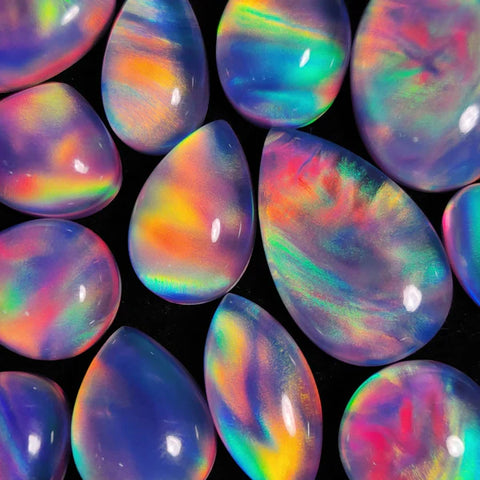
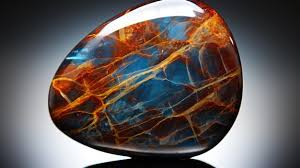
A flash of blue becomes green, purple shifts to pink, and orange turns yellow as the stone catches the light from another angle. All the colors dance as the Northern Lights move in the sky. Isn’t it amazing?

But what exactly is Aurora Opal?
Now you all must be curious: what is Aurora Opal? Is it natural opal or man-made opal? How is it form? How does it show a large, vivid range of colors? And what should you know before buying an Aurora Opal cabochon?
In this guide, we will explore what aurora opal is, how it looks, how it changes the colors and patterns, how it is cut and carved, how doublets are made, what the differences are between aurora opals and natural opals, and how to care for aurora opal.
So let’s explore!
What is Aurora Opal?
Aurora opal is a man-made or lab-grown opal. Inspired by the aurora borealis, aka the Northern Lights, from which it gets its name. It is a picture of natural opal. Unlike traditional opal, they are not mined from the earth but grown in a lab. They are produced through a controlled heat and manufacturing process. Sources describing the material identify it as a synthetic or man-made opal material, with formulations commonly created with silica and resin.
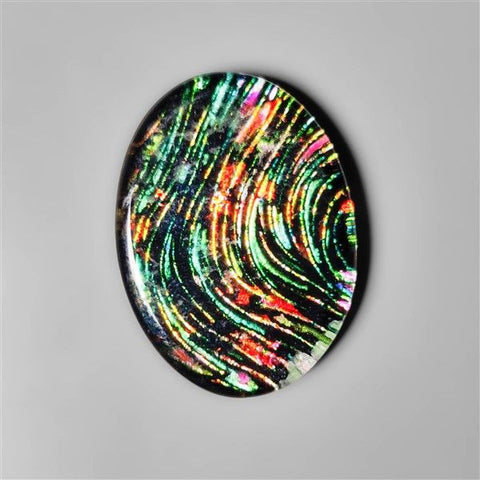
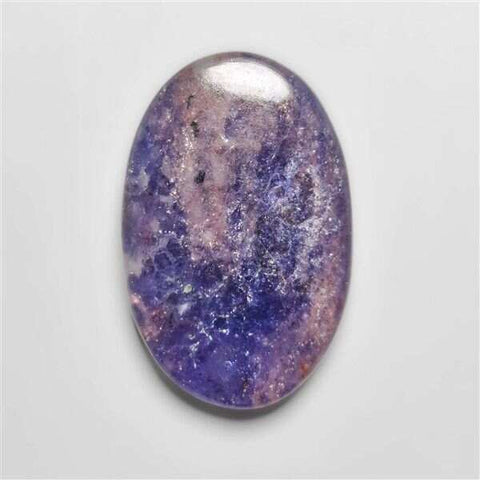
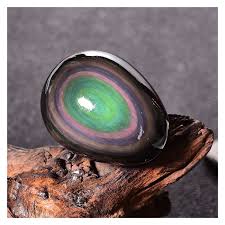
One of the characteristics that makes aurora opal more interesting and desirable to lapidary artists is its non-directional color patterns. They do not display a single direction of colors, but they are a combination of blue, green, orange, red, pink, and purple. These colors shift as we move the stone. This makes every cut an opportunity to reveal a different section of the colors and swirling patterns. This makes it popular among the lapidary artists and jewelry makers.

Is Aurora Opal a Real Opal?
This is one of the most asked questions.
The answer is:
Aurora Opal is not the same as naturally mined traditional opals; they are grown in a lab.
Natural opal is a naturally occurring hydrated silica material. GIA describes natural opal as hydrated silica with the chemical formula SiO2.nH2O, and notes that its famous play-of-color results from the interaction of light with these microscopic silica structures.
The terminology can become confusing because the gem trade uses terms such as synthetic opal, lab-grown opal, imitation opal, and assembled opal for different materials.
For this reason, the most important thing when purchasing Aurora Opal is to check exactly what material you are buying and how it has been constructed.

A reputable seller should disclose this information rather than presenting lab-created material as naturally mined opal. If you are looking for perfect aurora opal for your upcoming jewelry pieces, then The Lapidary Artist is your stop. You can find precisely cut, hand-carved, faceted aurora opals and aurora opal cabochons in every shape and size.
What Does Aurora Opal Look Like?
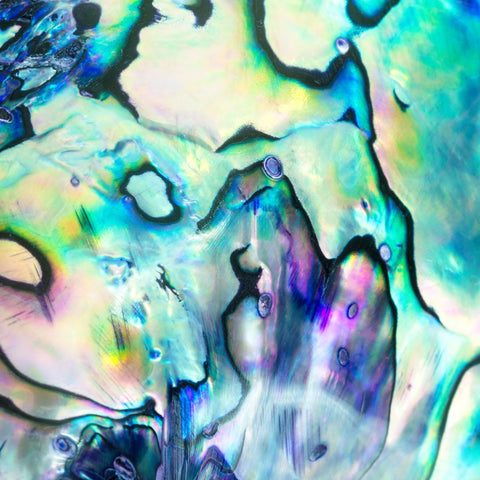
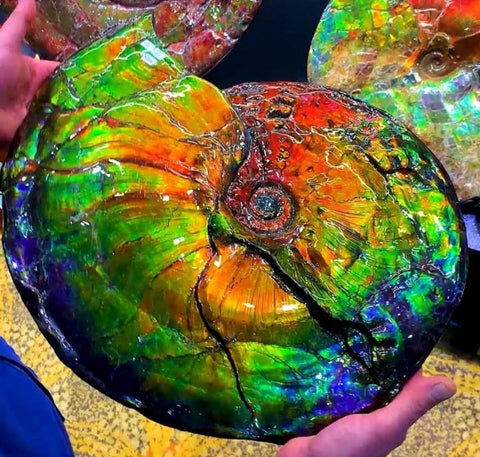
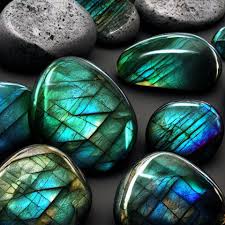
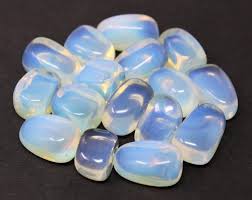
Aurora opal is known for its bright, vibrating, colorful, and highly dynamic appearance.
The different colors are the result of what material has been used and how it has been cut.
You can find it in so many colors, such as:
-
Blue
-
Green
-
Purple
-
Pink
-
Orange
-
Yellow
-
Red
-
White
-
Turquoise

The colors can be seen as swirls, bands, patches, and flowing patterns.
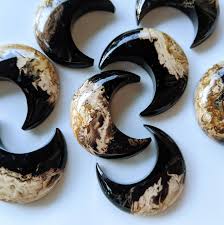
An oval cabochon may reveal one arrangement of color, while the same piece of rough material can produce a completely different appearance when cut into different shapes like heart, moon, star, or other carvings.
Aurora Opal Colors:
Aurora opal is one of the most desirable gemstones because of its broad color range.
Unlike other gemstones that are primarily valued for one dominant color, aurora opal can display multiple colors within a single piece.

Green Aurora Opal
Green may appear alongside blue, yellow, or turquoise, showing a look reminiscent of the Northern Lights.

Purple Aurora Opal
Purple adds a fantasy-inspired appearance; it is mainly combined with pink and blue.

Blue Aurora Opal
Blue color can be seen from soft icy tones to intense, striking electric blue, combined with pink.

Pink Aurora Opal

Pink color can be seen in soft pink and magenta tones.
Yellow Aurora Opal
Yellow color can be found with yellow and green colors.

Multicolor Aurora Opal
You can see green, blue, red, purple, and yellow in a single piece when you move the stone.

Why Does Aurora Opal Have So Many Colors?
The visual effect comes from the way light interacts with the material’s internal structure and color-producing components.
Man-made opal material can recreate visually striking optical effects because of its structure and composition.

Aurora opal should not be described as having the same structure as natural opals.
Instead of saying:
Aurora Opal is the same as natural opals.
A better description is:
Aurora Opal is a man-made opal. It is an imitation of natural opal, inspired by the Aurora Borealis Aka Northern Lights. Its material is designed to produce vibrant, color-changing phenomena.
Make it clear to the buyer.
How Is Aurora Opal Cut?
This is where aurora opals become interesting and grab attention from a Lapidary Artist’s perspective.
The goal is to find the most beautiful section of the material and reveal the colors through the cuts.
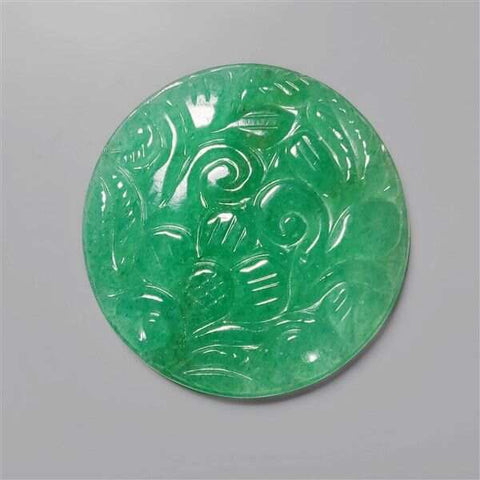
It can be cut into Cabochons, Hearts, Stars, Freefroms, Carvings, Inlay Pieces, and Decorative Objects.
The lapidary artist considers the color distribution before cutting the stone.
Two pieces cut from the same block can look different because of color distribution.
Aurora Opals Are in Different Shapes:
Aurora opals can be cut in different shapes, and faceting by aurora opal cabochons is among the most popular.
A Cabochon has a smooth, polished surface rather than facets. A cabochon allows a gemstone to show its patterns more clearly. We can cut cabochons in so many different shapes, like oval, teardrop, round, square, moon, star, pear, freeform, and so many more.
GIA notes that gemstone cutting plays a very important part in a gemstone's appearance, especially in opals. The smooth, domed cabochon can enhance the play of color in opal.

Can Aurora Opal Be Faceted?
And the answer is yes; Aurora opal can also be cut into facets, depending on the material.
Faceting creates a geometric appearance. When light interacts with facets or cuts of the aurora opal, it starts to spread its color.
Some common faceting styles

If you are a jewelry maker looking for more modern, aesthetic opals, faceted aurora opals are a perfect choice.
What Is An Aurora Opal Doublet?
The word doublet means an assembled stone, which is made by joining two stones or materials.
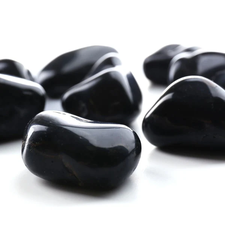
In opal, a thin material can be added to the back of the stone to provide support or strength. That material can be Black Onyx or any Agate.
Sometimes a Clear Crystal or Quartz Layer can be added on top of the aurora opal. That crystal layer adds more shine and enhances the opal’s beauty.
However, we need to understand that not every aurora opal is a doublet.

Aurora Opal vs. Natural Opal
Many times, gemstone buyers can be confused between Aurora Opal and Natural Opals. As we already discussed, aurora opals are man-made opals, while natural opals are mined from the earth. Here are some differences between aurora opals and natural opals that we need to know.

|
Feature |
Aurora Opal |
Natural Opal |
|
Origin |
Man-made/lab-created |
Naturally mined |
|
Geological formation |
No |
Yes |
|
Color |
Extremely vibrant |
Naturally variable |
|
Patterns |
Often swirling/non-directional |
Highly varied |
|
Price |
Generally more accessible |
Can range from affordable to very valuable |
|
Cutting |
Cabochons, carvings, faceting, and other forms |
Cabochons and other cuts depending on material and price |
The key point is that Aurora opal should be appreciated for what it is, not labeled as Natural Opal.
How to Care for Aurora Opal
Proper care of aurora opal can help to keep its beauty alive for years. Use a soft, damp cloth and mild soap to clean the aurora opals. Avoid extreme heat, harsh chemicals, and ultrasonic cleaners. They can harm the stone and leave scratches on the surface.

Aurora Opal for Jewelry Making
Because of their beauty, aurora opals are widely used in jewelry pieces. Their range of shapes and colors makes them suitable for creative designs such as:
Minimalist Jewelry
Small cabochons can add a subtle flash of color.

Statement Jewelry
Large freeform pieces can become the centrepiece of a design.

Nature-inspired Jewelry
Aurora opal carvings can complement flowers, insects, leaves, ladybugs, and so many nature-inspired designs are perfect for jewelry pieces.

Handmade Jewelry
Because each piece shows different colors and patterns, it is one of the best choices for handmade jewelry pieces like rings, pendants, and bracelets.

Frequently Asked Questions About Aurora Opal
-
Is Aurora Opal natural?
No, Aurora Opals are man-made or lab-created opals. They are inspired by the aurora borealis, aka the Northern Lights.
-
What colors does aurora opal come in?
Aurora Opal has a large range of colors, including red, green, purple, pink, yellow, orange, and more.
-
Can Aurora Opal be used in jewelry?
Yes, aurora opal is widely used in handmade jewelry like rings, pendants, bracelets, and wire-wrapped jewelry.
-
How to clean Aurora Opal jewelry?
To clean aurora opal jewelry, use a soft, damp cloth and mild soap, and avoid harsh chemicals and ultrasonic cleaners.


Post Comment